Google Home Instruction Manual: A Comprehensive Guide
Welcome! This guide details setting up your Google Home device, from unboxing to advanced features, ensuring a seamless smart home experience.
Initial Setup & Device Connection
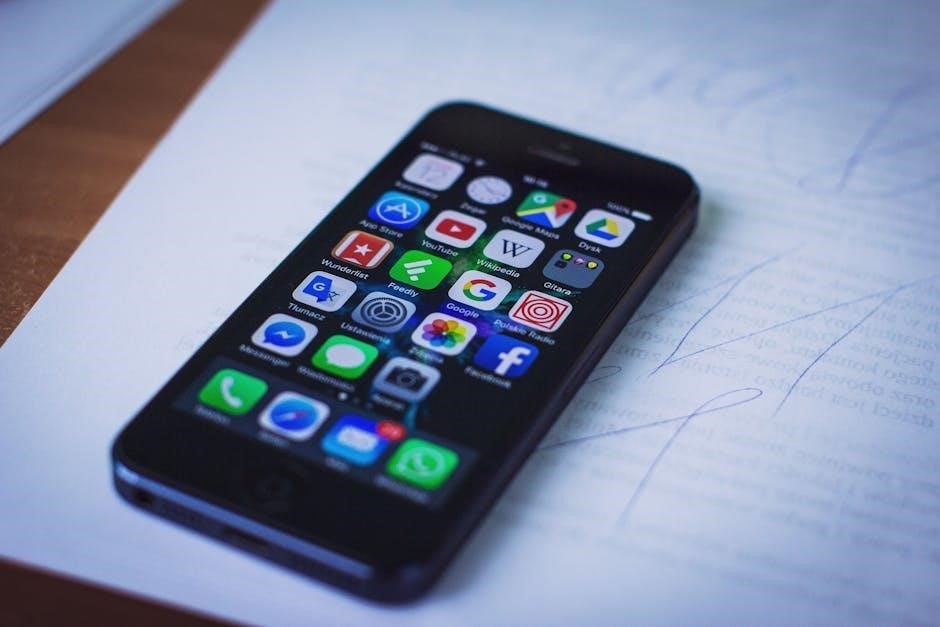
Getting Started: The initial setup process is straightforward for new Google Home app users. Begin by plugging in your Google Home device to a power outlet. Next, download and install the Google Home app from g.co/home/setup on your Android device, or directly from the app store.
Ensure your mobile device is connected to the same Wi-Fi network you intend to use for your Google Home. Open the app and tap “Get Started.” You’ll then be prompted to choose a Google Account to link – select an existing one or add a new one. Grant necessary permissions, including location access, which is crucial for discovering nearby devices during setup. The app will then scan for your Google Home device.
Unboxing and Powering On
What’s in the Box? Carefully unpack your Google Home device. You should find the Google Home unit itself, a power adapter, and potentially some quick start guides. Inspect the device for any visible damage.
Powering Up: Locate the power port on your Google Home. Connect the provided power adapter to the port and then plug the adapter into a working wall outlet. Upon receiving power, the Google Home will briefly illuminate, indicating it’s starting up. Allow a few moments for the device to fully boot. You’ll know it’s ready when you see a specific LED pattern, usually pulsing white, signaling it’s in setup mode.
Downloading and Installing the Google Home App
Getting the App: To begin setup, you’ll need the Google Home app on your smartphone or tablet. For Android users, navigate to g.co/home/setup directly within a web browser on your device. This link will prompt you to download the app from the Google Play Store.
iOS Installation: If you’re using an iPhone or iPad, open the App Store and search for “Google Home.” Locate the official Google Home app and tap “Get” to download and install it. Once installed, open the app and prepare to begin the device setup process. Ensure your mobile device is connected to the Wi-Fi network you intend to use for your Google Home.
Connecting to Wi-Fi
Wi-Fi Requirement: Your Google Home device requires a stable 2.4 GHz or 5 GHz Wi-Fi connection to function correctly. During the setup process within the Google Home app, you’ll be prompted to select a Wi-Fi network from a list of available networks.
Network Selection: Choose your home Wi-Fi network and enter the password when prompted. Double-check the password for accuracy, as incorrect credentials will prevent the device from connecting. The app will then attempt to connect your Google Home to the selected network. A successful connection is indicated within the app, allowing you to proceed with the setup.

Account Linking and Permissions
Google Account Selection: The Google Home app requires linking a Google Account to personalize your experience and access services. Choose the account you wish to associate with your device; you can add another if your desired account isn’t listed. Confirm your selection by tapping “Ok”.
Permission Requests: The app requests permissions, notably Location services, crucial for discovering nearby devices during setup. If Location services are off, navigate to your device settings, enable them for the Google Home app, and return to continue. Granting Location access allows the app to efficiently identify and connect to your new Google Home device.
Choosing Your Google Account
Account Association: During setup, the Google Home app prompts you to select a Google Account. This account will be linked to your Google Home device, enabling personalized features like voice recognition, music preferences, and calendar integration. Ensure you choose the account you regularly use for Google services.
Adding Alternative Accounts: If your preferred Google Account isn’t displayed, don’t worry! The app allows you to add a different account. Simply select the option to add another account and follow the on-screen instructions to sign in. Confirm your choice by tapping “Ok” to proceed with the setup process.
Granting Location Permissions
Location Access Explained: The Google Home app requires location access to efficiently discover nearby devices ready for setup. This permission allows the app to scan for your Google Home device and initiate the connection process smoothly. Don’t be alarmed; this isn’t for constant tracking!
Enabling Location Services: If location services are disabled on your device, the app will guide you to your device’s settings. Navigate to your phone’s settings, find the Google Home app, and toggle on Location services. Return to the Google Home app and tap “OK” to grant location access, enabling device discovery.

Device Discovery and Selection
Initiating the Scan: Once permissions are granted, the Google Home app automatically begins scanning for nearby Google Home devices that are plugged in and in setup mode. This process identifies devices ready to be connected to your Wi-Fi network and Google account.

Troubleshooting Discovery: If no devices are found, and you are setting up a new device, confirm it’s powered on and near your mobile device. Tap “Yes” and proceed to the next step. If no devices are found and you aren’t setting up a new device, select “No”. The app will then guide you accordingly.
Scanning for Nearby Devices
The Search Begins: After confirming your Google Account and granting necessary permissions, the Google Home app initiates a scan for compatible devices in close proximity. This automated process seeks out Google Home and Google Home Mini devices that are powered on and awaiting initial setup. Ensure your mobile device’s Bluetooth is enabled for optimal performance during this stage.
Device Readiness: The app specifically looks for devices in setup mode, indicated by a specific LED pattern. If a device isn’t detected, double-check its power connection and ensure it’s actively broadcasting its presence. A stable Wi-Fi connection on your mobile device is also crucial for successful scanning.
Handling Multiple Device Detection
Several Devices Found? If the Google Home app detects more than one device during the scanning process, a selection screen will appear. This allows you to individually choose which Google Home device you wish to configure first. Carefully identify each device – consider their physical location or any distinguishing features.
Precise Selection: Tap on the specific device you intend to set up and then press “Next” to proceed. If your desired device isn’t listed, select “Don’t see your device” for troubleshooting options. This ensures the app focuses on the correct unit, avoiding setup conflicts and streamlining the process.
Setting Up Your Google Home Device
Finalizing Setup: After selecting your device, the Google Home app will begin the configuration process. This involves connecting your device to your chosen Wi-Fi network and completing any remaining setup steps. Ensure a stable Wi-Fi connection throughout this phase for optimal results.
Confirmation & Personalization: The app will confirm successful connection and prompt you to personalize settings. This includes naming your device and assigning it to a specific room within your home. These details enhance voice command functionality and organization. Follow the on-screen instructions to complete the setup and begin enjoying your Google Home!
Voice Activation and “Hey Google”
Activating the Assistant: Your Google Home device is primarily controlled through voice commands, initiated by saying “Hey Google.” This phrase awakens the Google Assistant, signaling it to listen for your request. Ensure clear pronunciation for accurate recognition.
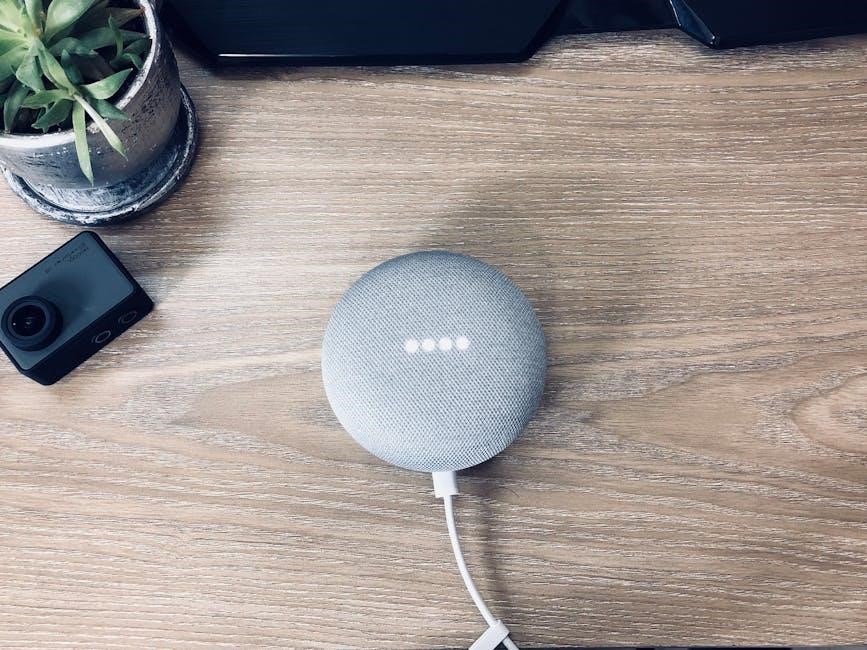
Sensitivity & Response: The device is designed to respond even from a distance, but ambient noise can affect performance. Adjust the microphone sensitivity within the Google Home app if needed. Once activated, a visual cue (LED lights) confirms the Assistant is listening, and a chime indicates response readiness. Enjoy hands-free control!
Basic Voice Commands
Essential Commands: Google Home responds to a wide array of voice commands. To play music, simply say “Hey Google, play [song/artist/playlist] on [music service].” For time management, use “Hey Google, set an alarm for [time]” or “Hey Google, set a timer for [duration].”
Information & More: Ask questions like “Hey Google, what’s the weather?” or “Hey Google, define [word].” Explore commands for news, sports scores, and unit conversions. Experiment to discover the full range of capabilities – Google Assistant is constantly evolving!
Playing Music
Seamless Audio: To initiate music playback, begin with the wake word “Hey Google,” followed by your request. For example, say “Hey Google, play [song title]” or “Hey Google, play [artist name].” You can specify a music service like Spotify, YouTube Music, or Pandora by saying, “Hey Google, play [song] on [service].”
Control & Discovery: Adjust volume with commands like “Hey Google, volume up” or “Hey Google, set volume to 5.” Discover new music by asking, “Hey Google, play some relaxing music” or “Hey Google, play the daily mix.” Enjoy effortless audio control with your voice!
Setting Alarms and Timers

Time Management: Google Home simplifies scheduling with voice commands. To set an alarm, say “Hey Google, set an alarm for [time]” or “Hey Google, wake me up at [time].” You can also create recurring alarms by specifying days of the week. For timers, use commands like “Hey Google, set a timer for [duration].”
Control & Customization: Manage alarms and timers by saying “Hey Google, cancel my alarm” or “Hey Google, how much time is left on the timer?” Multiple alarms and timers can be active simultaneously. Enjoy punctual mornings and perfectly timed tasks with Google’s assistance!
Controlling Smart Home Devices
Seamless Integration: Google Home acts as a central hub for compatible smart home devices. Ensure your devices are linked within the Google Home app for effortless control. Commands include “Hey Google, turn on the lights,” “Hey Google, set the thermostat to [temperature],” and “Hey Google, lock the door.”
Device Compatibility: A wide range of devices, including lights, thermostats, locks, and more, are supported. Explore routines within the app to automate multiple actions with a single command. Enjoy a connected and convenient living experience, managed entirely by your voice!
Customizing Your Google Home Settings
Personalize Your Experience: The Google Home app allows extensive customization. Adjust volume levels for clear audio, tailoring it to your preferences and room size. Modify audio settings, including bass and treble, for optimal sound quality. Rename your Google Home device for easy identification within your home network.
Location Matters: Change the device’s location within the app to ensure accurate weather reports and localized information. Explore additional settings for routines, notifications, and accessibility features. Fine-tune your Google Home to perfectly match your lifestyle and needs!
Adjusting Volume and Audio Settings
Sound Control at Your Fingertips: Within the Google Home app, navigate to your device settings to precisely control the volume. Use the slider for quick adjustments, or utilize voice commands like “Hey Google, volume up” or “Hey Google, mute.” Explore advanced audio settings to optimize sound for music, podcasts, or news.
Equalization Options: Fine-tune the bass and treble levels to match your listening preferences and room acoustics. Consider enabling “Adaptive Volume” for automatic adjustments based on ambient noise. Ensure a consistently clear and enjoyable audio experience with these customizable settings!
Changing Device Name and Location
Personalize Your Setup: Within the Google Home app, access device settings to easily rename your Google Home. Choose a descriptive name – like “Living Room Speaker” – for effortless voice control. Accurate naming is crucial when managing multiple devices.
Optimizing Location Services: Correctly setting your device’s location enhances functionality, enabling accurate weather reports, traffic updates, and localized search results. Update the location within the app if you move your Google Home. Precise location data ensures a tailored and responsive smart home experience!
Troubleshooting Common Issues
Connectivity Problems? If your Google Home won’t connect to Wi-Fi, ensure your router is functioning correctly and the device is within range. Restart both your Google Home and your router. Double-check your Wi-Fi password within the Google Home app.
Assistant Unresponsive? When the Google Assistant isn’t responding, verify the microphone isn’t muted (check the LED indicators). A simple reboot often resolves temporary glitches. Ensure the device has a stable internet connection. If issues persist, consult the Google Home Help Center for further assistance and advanced troubleshooting steps.
Device Not Connecting to Wi-Fi
Troubleshooting Wi-Fi Issues: First, confirm your Google Home is within range of your Wi-Fi router. Ensure your router is powered on and functioning correctly. Double-check that you’re entering the correct Wi-Fi password within the Google Home app – passwords are case-sensitive! Restart both your Google Home device and your Wi-Fi router.
App Assistance: Within the Google Home app, attempt to reconnect the device manually. If problems continue, temporarily disable any VPNs or proxy settings on your network. Verify your internet service provider is not experiencing outages. A factory reset might be necessary as a last resort.
Google Assistant Not Responding
Addressing Assistant Issues: If Google Assistant isn’t responding, first, ensure the microphone isn’t muted – check for a red light on the device. Try rephrasing your command; sometimes, slight adjustments can help. Confirm your Google Home device has a stable internet connection, as this is crucial for Assistant functionality.
App & Device Checks: Within the Google Home app, check for software updates for both the app and your Google Home device. Restarting the device can often resolve temporary glitches. If issues persist, try unlinking and relinking your Google account within the app settings.
Factory Resetting Your Google Home
Restoring to Defaults: A factory reset erases all personal settings, returning your Google Home to its original state. This is useful for troubleshooting persistent issues or preparing the device for a new owner. Locate the reset button – typically a small indentation on the bottom of the device.
Reset Procedure: Press and hold the reset button for approximately 15 seconds, until the device confirms it’s resetting. The device will then restart and require a complete setup process, as if it were brand new. Remember, this will remove all linked accounts and customizations.
Understanding LED Indicators
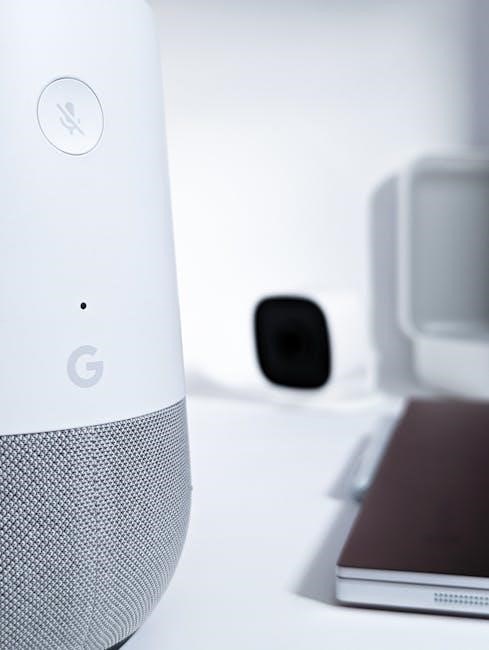
Decoding the Lights: Your Google Home utilizes LED lights to communicate its status. A solid white light generally indicates the device is on and functioning normally. Pulsing amber signifies the device is entering setup mode or experiencing an issue connecting to Wi-Fi.
Troubleshooting with LEDs: A solid red light often suggests the microphone is muted. Different blinking patterns can indicate specific errors; consult the Google Home Help Center for detailed interpretations. Observing the LED color and behavior provides valuable clues for diagnosing and resolving common problems, ensuring optimal performance.
Privacy Settings and Data Management
Controlling Your Data: Google Home collects data to personalize your experience. You have control over this information! Within the Google Home app, access “Privacy settings” to review and manage your voice and activity data.
Deleting Voice Recordings: Regularly review your activity and delete recordings you’re uncomfortable with. You can also disable voice recording altogether, though this limits functionality. Google provides tools to download your data and understand how it’s used. Prioritizing your privacy ensures a comfortable and secure smart home environment.
Software Updates and Maintenance
Keeping Your Device Current: Google regularly releases software updates for your Home device, enhancing performance, adding features, and improving security. These updates happen automatically, usually overnight, ensuring minimal disruption.
Checking for Updates: While automatic, you can manually check for updates within the Google Home app under device settings. Maintaining the latest software is crucial for optimal functionality and protection against vulnerabilities. Periodically rebooting your Google Home can also resolve minor glitches and maintain peak performance. A well-maintained device provides a smoother, more reliable experience.
Exploring Advanced Features
Beyond the Basics: Google Home offers a wealth of advanced features to personalize your experience. Utilize Routines to automate multiple actions with a single command – like starting your day with news, weather, and music.
Broadcasts & Intercom: Broadcast messages to all Google Home devices in your house, or use Intercom to communicate directly with specific rooms. Explore Continued Conversation for hands-free interactions and personalized results. Discover integrations with various services for expanded control and information. Regularly check the Google Home app for newly added features and capabilities.