Immediate Life Support (ILS) manuals are now freely downloadable as PDFs, PPTs, or text files. These resources, provided by the Resuscitation Council, offer and training for emergency responders worldwide.
Definition and Scope
Immediate Life Support (ILS) is a concise, evidence‑based framework that guides first‑responders and healthcare professionals through critical steps to stabilize patients before advanced care arrives. The freely downloadable manual—available in PDF, PPT, or text—covers core principles such as rapid assessment, airway management, and early defibrillation. It applies to pre‑hospital settings, operating rooms, and emergency departments, ensuring consistent, high‑quality care regardless of environment. The scope extends beyond basic life‑saving techniques to include protocols for cardiac arrest, respiratory distress, and other life‑threatening emergencies. Open access promotes worldwide adoption, allowing practitioners. The free distribution model also supports educational institutions, community health programs, and individual learners seeking to enhance competence in emergency medicine. In sum, the ILS manual bridges knowledge gaps, standardizes response procedures, and empowers users to act decisively in critical moments for all responders
Historical Development
The Immediate Life Support (ILS) manual emerged from the need to streamline emergency response protocols in the early 2000s. Initial iterations were developed by national resuscitation councils, drawing on decades of cardiopulmonary resuscitation (CPR) research. By 2005, the first free PDF version was released, allowing widespread access to standardized guidelines. Subsequent revisions incorporated advanced airway techniques and rapid defibrillation algorithms, reflecting updated evidence. In 2012, the manual was adapted into a PowerPoint format to support interactive training sessions. The 2018 update introduced a modular structure, enabling users to download specific sections as text files. Today, the free ILS manual is distributed across multiple platforms, ensuring that clinicians, first‑responders, and educators worldwide can access the latest evidence‑based practices without cost. Its open‑access nature allows updates, enabling users now! to stay current with evolving resuscitation science. Updated 2026

Free Manual Availability
Immediate Life Support manuals are freely available in PDF, PPT, and text formats. Download from the Resuscitation Council website or trusted open‑source repositories. No cost, instant access. all users!?
Official Resuscitation Council Resources

Immediate Life Support manuals are freely available from the UK, European, and Australian Resuscitation Councils. Each council hosts the latest edition on its website, offering PDF, PPT, or plain‑text downloads. The PDFs contain detailed diagrams, algorithms, and evidence‑based guidelines; the PPT files allow educators to customize slides for workshops. All versions are updated regularly to reflect new research and clinical practice changes. The manuals are distributed under a Creative Commons license, permitting educators to adapt and share the content while retaining attribution. Download links are protected by simple CAPTCHA verification, but no registration is required. The resources are available in multiple languages, including English, Spanish, French, and German, to support international training. For technical support, councils provide FAQ pages and email assistance. By using these official materials, practitioners can ensure they follow the most current, evidence‑based protocols for emergency care. All materials free today registration needed!
Third-Party Open-Source PDFs

Download Formats and Platforms
PDF, PPT, and TXT formats are available, each tailored for various devices. The Resuscitation Council site, GitHub, and OpenStax host download links forto quick access.
PDF and Text Files
The Resuscitation Council’s Immediate Life Support manual is offered in both PDF and plain text formats, ensuring accessibility across devices and platforms. The PDF version preserves the original layout, including diagrams, flowcharts, and color‑coded sections, making it ideal for classroom settings, workshops, and on‑the‑go reference. It supports searchable text, allowing users to locate specific sections quickly. The text file, on the other hand, strips formatting for lightweight use, enabling easy editing, annotation, or integration into custom study aids. Both formats are free to download from the Council’s official website, GitHub repositories, and open‑source libraries, and they comply with public‑domain licensing to avoid copyright restrictions. Users can download the PDF via a direct link or use the text file for offline reading on low‑bandwidth devices. The manual’s open‑source nature encourages community contributions, such as translations or updates, ensuring the content remains current and globally relevant.!!
PowerPoint Presentations
The Resuscitation Council offers a comprehensive PowerPoint version of the Immediate Life Support manual, optimized for interactive learning and quick reference. Each slide is meticulously designed to mirror the manual’s structure, featuring concise bullet points, high‑resolution images, and step‑by‑step protocols. The presentation includes animated sequences that demonstrate airway management, chest compressions, and emergency medication administration, allowing learners to visualize critical actions in real time. Users can download the PPT file directly from the Council’s website or through open‑source repositories, ensuring zero cost and unrestricted use. The format supports both Windows and Mac platforms, and the file size is kept under 5 MB to facilitate rapid transfer and offline access. Additionally, the presentation can be converted to PDF or video formats for broader distribution, and educators can customize slide decks by adding local guidelines or language translations. It is widely endorsed by global health bodies. now.

Core Content Overview
Immediate Life Support covers airway control, CPR, AED use, and drug protocols. The manual details step‑by‑step actions for rapid response, ensuring lifesaving competence now!.
Basic Life Support Principles
Immediate Life Support (ILS) manuals, freely downloadable in PDF, PPT, or text format, outline essential Basic Life Support (BLS) steps. The core principles emphasize rapid assessment, airway opening, breathing support, and circulation restoration. The manual details the ABC sequence: check responsiveness, call for help, open airway using head‑tilt/ chin‑lift, perform rescue breaths, and initiate chest compressions at a 30:2 ratio. It explains compression depth (at least 2 inches in adults), rate (100–120 per minute), and full recoil. The guide also covers the use of an automated external defibrillator (AED), including electrode placement, shock delivery, and post‑shock rhythm analysis. Drug administration protocols, such as epinephrine and amiodarone, are summarized with dosage and timing. The free resource includes illustrative diagrams, quick‑reference pocket cards, and interactive checklists to reinforce learning. Users can download the manual directly from the Resuscitation Council website or reputable open‑source repositories, ensuring up‑to‑date, evidence‑based BLS training for healthcare professionals and first responders alike!!!!!!
Advanced Airway Management
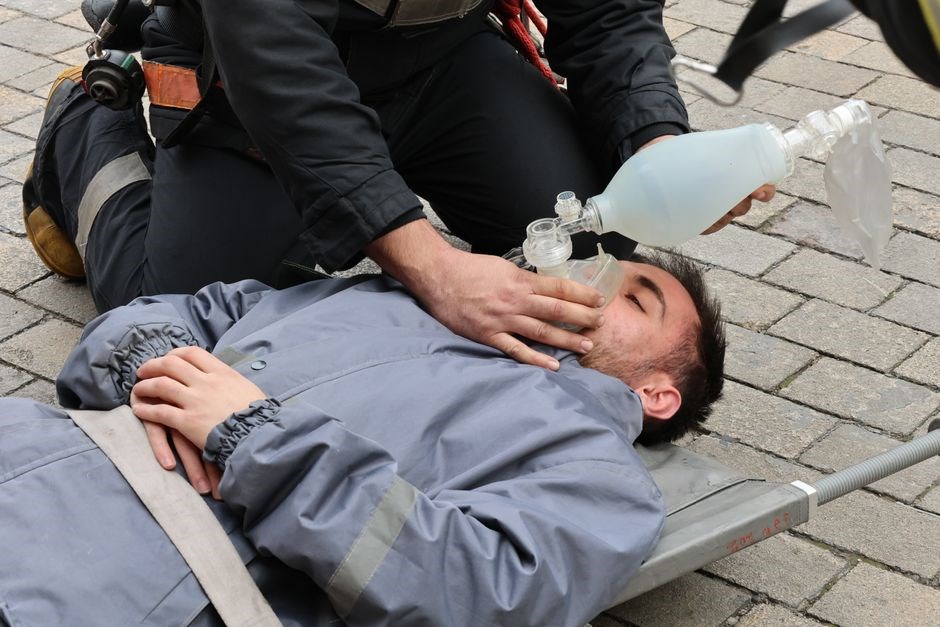
The ILS manual provides a concise yet comprehensive guide to advanced airway techniques essential for critical care providers. It covers the indications for endotracheal intubation, supraglottic airway devices, and cricothyrotomy. Step‑by‑step instructions emphasize patient positioning, pre‑oxygenation, and the use of video laryngoscopy to improve first‑pass success. The manual explains cuff inflation pressures, confirmation of placement via capnography, and troubleshooting airway obstruction. It also details the management of difficult airways, including the use of bougies, stylets, and fiberoptic scopes. Practical tips for airway maintenance during transport and in austere environments are included. The downloadable PDF and PPT versions feature color‑coded diagrams, quick‑reference checklists, and interactive quizzes to reinforce skill acquisition. By following these evidence‑based protocols, responders can secure the airway efficiently, reduce hypoxia, and improve patient outcomes in emergency settings. The manual also discusses laryngeal mask airways (LMAs) as a bridge to airway, emergency cricothyrotomy steps, and confirms tube placement by chest rise, auscultation, and capnography, offering troubleshooting tips for misplacement or obstruction.!!!
Complementary Learning Tools
Free mobile apps, pocket cards, and modules complement the ILS manual. Download iOS/Android apps, view PDF pocket cards, and access web‑based simulations for practice!
Mobile Apps and Pocket Cards
Free mobile applications and pocket card PDFs are now available alongside the Immediate Life Support manual. These tools provide quick reference charts, step‑by‑step algorithms, and interactive quizzes that reinforce key concepts. Download the official Resuscitation Council app for iOS and Android, or use the web‑based version for instant access. Pocket cards can be printed or viewed as PDFs, featuring concise CPR, airway, and medication guidelines. Many platforms offer flashcards and scenario‑based simulations that adapt to user performance. By integrating these resources, learners can practice in real‑time, review critical steps, and stay current with updated guidelines without additional cost. Users can also download interactive case studies, video tutorials, and printable checklists that align with the latest European Resuscitation Council updates. These resources are designed to fit into busy schedules, allowing quick refreshers before field deployment or classroom sessionsAll resources free
Interactive Online Modules

Free interactive modules accompany the Immediate Life Support manual, offering self‑paced learning, scenario‑based simulations, and real‑time feedback. Hosted on the Resuscitation Council’s e‑learning portal, these modules cover core topics such as airway management, rhythm analysis, and medication dosing. Learners can navigate through animated tutorials, answer multiple‑choice questions, and track progress with built‑in assessment tools. The platform supports both desktop and mobile browsers, enabling on‑the‑go review. Modules are updated annually to reflect the latest European Resuscitation Council guidelines, ensuring that responders receive current evidence‑based practices. Additionally, downloadable PDF summaries and printable checklists are embedded within each module for quick reference during emergencies. By integrating these resources, training programs can supplement classroom instruction, provide individualized practice, and maintain competency without incurring extra costs. These modules run on all browsers and devices now!

Certification Pathways
Certification pathways for ILS include courses, online modules, and practical exams. Free manuals support study, while exam prep resources ensure readiness. Completion grants recognized credentials. globallynow
Required Courses
To obtain Immediate Life Support (ILS) certification, candidates must complete a structured curriculum that blends theoretical knowledge with hands‑on practice. The core modules cover airway management, breathing support, circulation assessment, and emergency pharmacology. Participants learn to perform high‑quality chest compressions, use automated external defibrillators (AEDs), and manage airway adjuncts such as oropharyngeal and nasopharyngeal devices. Practical sessions involve simulated cardiac arrest scenarios, trauma resuscitation drills, and team communication exercises. Assessment typically includes a written exam, a skills test, and a scenario‑based performance review. Many training providers offer the full course in a single day, while others split it into two half‑days to accommodate shift workers. Accredited institutions provide downloadable manuals, slide decks, and pocket cards to reinforce learning. Completing the course grants a certificate that is recognized worldwide for all for all and peers.!!!

Exam Preparation Resources
Free resources for ILS exam preparation are abundant. The Resuscitation Council offers downloadable PDFs that outline key concepts, algorithms, and practice questions. Many third‑party sites host interactive modules where learners can test knowledge through multiple‑choice quizzes, timed scenarios, and video demonstrations of airway techniques. Pocket cards, available as printable PDFs or mobile apps, condense algorithms into quick‑reference flashcards for on‑the‑go review. Simulation software, some open‑source, allows users to run virtual cardiac arrest drills, reinforcing compression depth, rate, and rhythm recognition. Practice exams mirror the official test format, featuring scenario‑based questions and performance metrics. Study groups can share annotated slides and discussion forums. Combining these tools with hands‑on practice ensures a comprehensive review, boosting confidence before the certification exam. Additionally, learners can download a pocket‑card PDF summarizing algorithms in,

Legal and Ethical Considerations
Legal and ethical considerations for free ILS manuals include respecting copyright, ensuring information, and protecting user data. Users must verify source legitimacy and comply with licensing terms!!!!!!!
Copyright and Licensing
Free ILS manuals are distributed under Creative Commons licenses that allow non‑commercial use, sharing, and adaptation with attribution. The Resuscitation Council’s official PDF, PowerPoint, and text versions are released under a CC‑BY‑SA 4.0 license, meaning users can remix the material for educational purposes as long as they credit the source and share derivatives under the same terms. Any commercial redistribution requires explicit permission from the Council. Users should verify the license details at the download page, noting that the documents are intended for training and research only. The Council also recommends citing the manual in any derivative work to maintain traceability. When incorporating the content into apps or websites, developers must include the license notice and provide a link to the original source. Failure to comply can result in copyright infringement claims, especially if the material is used for profit or in a context that misrepresents the Council’s endorsement. Council review ensures medical accuracy. All users must cite the source in any derivative work compliance!!
Data Privacy for Digital Resources
When downloading or accessing Immediate Life Support (ILS) manuals in digital form, users should be aware of privacy implications. The Resuscitation Council’s website collects minimal data—typically IP addresses and browser information—to monitor traffic and ensure secure delivery. No personal identifiers are stored unless the user voluntarily submits them via a contact form or subscription. All data transmission occurs over HTTPS, encrypting the file transfer and protecting against interception. The Council’s privacy policy states that third‑party hosting services comply with GDPR and other regional regulations, limiting data sharing to necessary technical support. Users who download PDFs, PPTs, or TXT files can safely store them locally; the files themselves contain no embedded tracking pixels or scripts. However, if the manual is opened in a cloud‑based editor, the service provider may log access times and user activity. Finally, redistribution maintains license and excludes personal data downloader, copyright and privacy standards.